
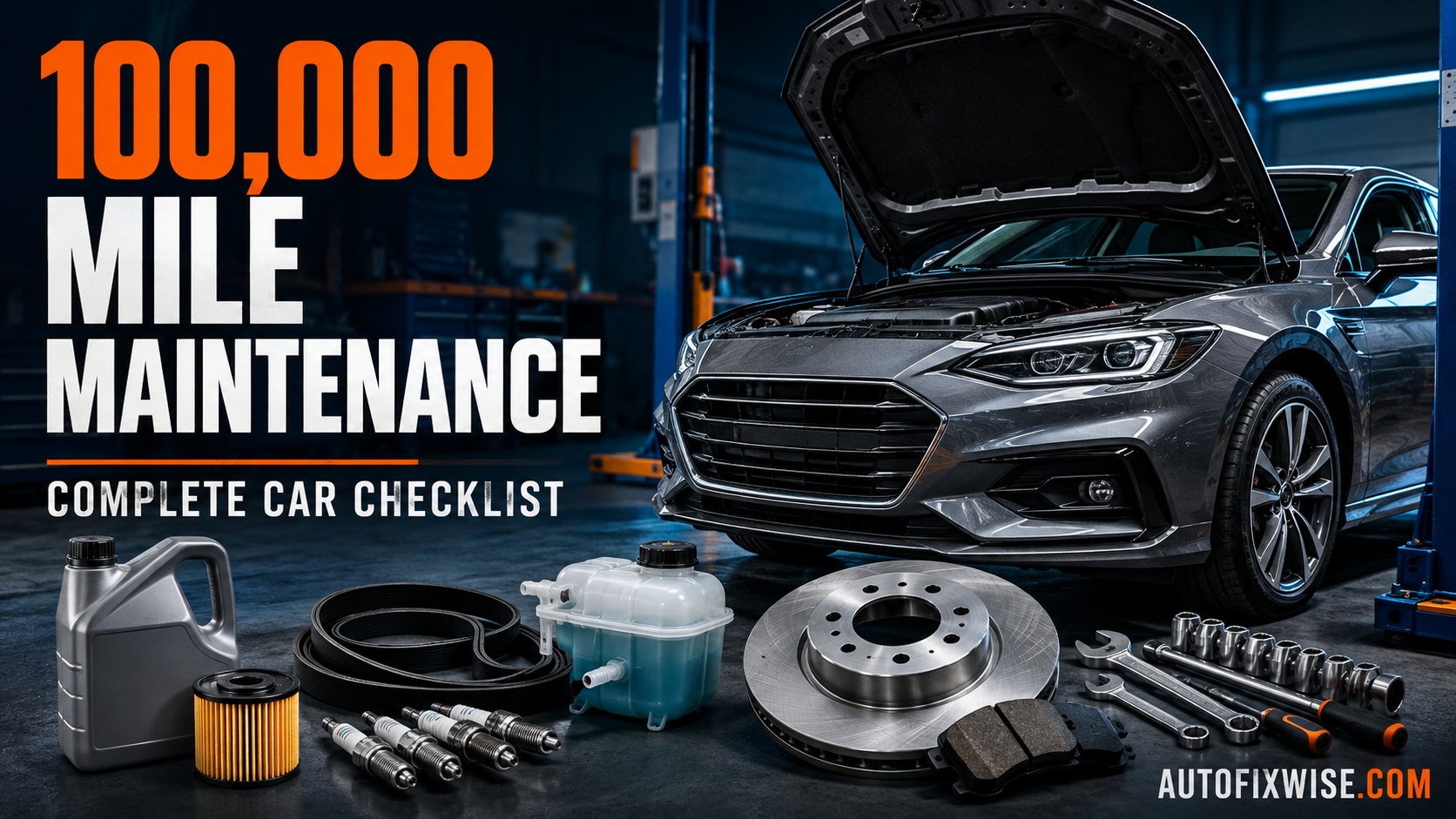
Reaching 100,000 miles is an important milestone for any vehicle. It does not mean the car is nearing the end of its life, but it does mean that several fluids, filters, belts, ignition components, and suspension parts may require attention.
A properly maintained modern vehicle can travel well beyond 100,000 miles. The key is identifying worn components before they cause breakdowns or damage more expensive parts.
There is no single maintenance schedule that applies to every vehicle. Engine design, driving conditions, previous service history, climate, and manufacturer recommendations all affect what needs to be replaced.
Use this 100,000-mile maintenance checklist as a general guide, then compare it with the maintenance schedule in your owner’s manual.
Is 100,000 Miles a Lot for a Car?
One hundred thousand miles was once considered a sign that a vehicle was approaching the end of its useful life. Modern engines, transmissions, lubricants, and manufacturing methods have changed that expectation.
Many cars can exceed 150,000 or even 200,000 miles when they receive regular maintenance. Mileage alone does not reveal a vehicle’s true condition.
A well-maintained car with 110,000 miles may be more reliable than a neglected car with only 60,000 miles. Service records, oil-change history, driving environment, and previous repairs often matter more than the number displayed on the odometer.
Highway mileage is generally easier on the engine, brakes, and transmission than frequent short trips. Stop-and-go traffic, extreme temperatures, towing, dusty roads, and repeated cold starts can accelerate wear.
What Is Included in a 100,000-Mile Service?
A proper 100,000-mile service is more than an oil change. It normally combines scheduled replacements with a comprehensive inspection.
Items commonly checked during a 100k-mile service include:
- Engine oil and oil filter
- Transmission fluid
- Engine coolant
- Spark plugs
- Timing belt or timing chain
- Serpentine belt and tensioner
- Brake pads, rotors, and brake fluid
- Engine and cabin air filters
- Fuel-system components
- Battery and charging system
- Suspension and steering parts
- Tires and wheel alignment
- Hoses, seals, and fluid leaks
- Exhaust and emissions components
Not every item must automatically be replaced. Some parts should be inspected and changed only if worn, damaged, contaminated, or required by the manufacturer’s schedule.
Complete 100,000-Mile Maintenance Checklist
| Maintenance item | Recommended action |
|---|---|
| Engine oil and filter | Replace if due |
| Transmission fluid | Inspect history and service requirement |
| Engine coolant | Test condition and replace if scheduled |
| Spark plugs | Inspect or replace according to specification |
| Timing belt | Replace if interval is due |
| Timing chain | Inspect for symptoms or related trouble codes |
| Serpentine belt | Inspect for cracks, glazing, and wear |
| Brake system | Inspect pads, rotors, fluid, hoses, and calipers |
| Engine air filter | Inspect and replace if dirty |
| Cabin air filter | Replace if restricted or overdue |
| Battery | Test voltage and starting performance |
| Suspension | Inspect shocks, struts, bushings, and joints |
| Steering | Inspect tie rods, boots, and fluid where applicable |
| Tires | Check tread, pressure, age, and alignment |
| Fuel system | Inspect for leaks and performance problems |
| Exhaust system | Check for leaks, rust, and loose components |
| Fluid leaks | Inspect engine, transmission, cooling and steering systems |
1. Replace the Engine Oil and Oil Filter
Engine oil protects internal components by reducing friction, controlling heat, and carrying contaminants to the oil filter.
At 100,000 miles, consistent oil changes become especially important. Older engines may consume oil or develop leaks around seals and gaskets. Check the oil level regularly instead of waiting for the warning light.
Look for:
- Low oil level
- Dark or contaminated oil
- Oil spots beneath the vehicle
- Burning-oil odor
- Blue exhaust smoke
- Unusual ticking or knocking sounds
Use the viscosity and oil specification listed by the vehicle manufacturer. A higher-mileage oil may help certain older engines, but it should still meet the required specification.
2. Inspect the Transmission Fluid
Transmission service is one of the most misunderstood parts of high-mileage maintenance. Some vehicles have conventional automatic transmissions, while others use CVTs, dual-clutch units, or manual transmissions. Each type requires a specific fluid and service procedure.
Before servicing the transmission, check its history and the manufacturer’s schedule. Using the wrong fluid can cause serious damage.
Warning signs that require attention include:
- Delayed engagement
- Slipping during acceleration
- Rough or abrupt shifting
- Shuddering
- Transmission-fluid leaks
- Burning smell
- Unusual whining noises
If the vehicle has never had a transmission service, consult a qualified technician before requesting an aggressive machine flush. A drain-and-fill procedure may be more appropriate for some high-mileage vehicles.
3. Check and Replace the Engine Coolant
Engine coolant absorbs heat, protects the cooling system against corrosion, and helps prevent freezing. Its protective additives gradually lose effectiveness.
Old or contaminated coolant can contribute to corrosion, radiator problems, water-pump wear, and engine overheating.
The cooling-system inspection should include:
- Coolant level and condition
- Radiator
- Expansion tank
- Upper and lower radiator hoses
- Heater hoses
- Thermostat
- Water pump
- Radiator cap
- Cooling fans
- Hose connections
Never remove the radiator cap while the engine is hot. Pressurized coolant can cause serious burns.
Coolant types should not be selected by color alone. Use the exact specification required for the vehicle.
4. Replace or Inspect the Spark Plugs
Spark plugs ignite the air-fuel mixture inside gasoline engines. Their replacement intervals vary depending on plug material and engine design.
Worn spark plugs can produce:
- Hard starting
- Rough idle
- Engine misfires
- Reduced acceleration
- Poor fuel economy
- Increased emissions
- A flashing or steady check engine light
If the spark plugs are being replaced, inspect the ignition coils, coil boots, and related wiring. Oil inside the spark-plug wells may indicate a leaking valve-cover gasket.
Do not ignore an active misfire. Unburned fuel entering the exhaust can overheat and damage the catalytic converter.
5. Inspect the Timing Belt or Timing Chain
The timing system keeps the crankshaft and camshafts synchronized. A failure can stop the engine immediately and, on some engines, cause severe internal damage.
Timing belt
Timing belts have scheduled replacement intervals based on mileage, time, or both. If the belt is due or its history is unknown, replacement should not be delayed.
A timing-belt service may also include:
- Belt tensioner
- Idler pulleys
- Water pump
- Related seals
- Accessory drive belts
Replacing these components together may reduce duplicated labor later.
Timing chain
Timing chains are designed differently and are not always scheduled for routine replacement. However, they can stretch or develop tensioner and guide problems.
Possible timing-chain symptoms include:
- Rattling during startup
- Check engine light
- Camshaft or crankshaft correlation codes
- Rough running
- Metal particles in the oil
- Difficulty starting
A timing chain should be inspected when symptoms are present rather than replaced solely because the odometer reaches 100,000 miles.
6. Inspect the Serpentine Belt and Tensioner
The serpentine belt may operate the alternator, air-conditioning compressor, power-steering pump, or water pump, depending on the vehicle.
Check the belt for:
- Cracks
- Missing ribs
- Frayed edges
- Glazed or shiny surfaces
- Oil contamination
- Squealing noises
The tensioner and pulleys should rotate smoothly without excessive movement or grinding. A failed belt can cause charging, steering, or cooling problems and leave the vehicle stranded.
7. Inspect the Brake System
Brake wear depends heavily on driving conditions. A vehicle used in city traffic may require brakes much sooner than one driven mainly on highways.
A comprehensive inspection should cover:
- Brake-pad thickness
- Rotor condition
- Caliper operation
- Brake hoses and metal lines
- Parking brake
- Brake-fluid level and condition
- Warning lights
- Fluid leaks
Brake fluid absorbs moisture over time. Its replacement interval is often based on time rather than mileage, so service history matters.
Have the brakes inspected immediately if the vehicle pulls while braking, the pedal feels soft, stopping distance increases, or you hear grinding.
8. Replace the Engine and Cabin Air Filters
The engine air filter prevents dirt from entering the engine. A heavily restricted filter can reduce airflow and may affect performance or fuel economy.
Replacement frequency depends on the environment. Vehicles driven on dusty roads may require more frequent filter changes.
The cabin air filter cleans air entering the passenger compartment. A clogged cabin filter may cause:
- Weak airflow
- Unpleasant odors
- Noisy blower operation
- Poor defroster performance
- Increased dust inside the cabin
These filters are usually inexpensive and easy to overlook.
9. Check the Fuel System
The fuel system must maintain the correct pressure and deliver fuel evenly to each cylinder.
At 100,000 miles, inspect for:
- Fuel leaks
- Damaged lines
- Difficult starting
- Rough idle
- Hesitation
- Poor fuel economy
- Injector-related trouble codes
Some vehicles have serviceable fuel filters, while others place the filter inside the fuel-tank module. Do not replace it automatically without checking the manufacturer’s maintenance schedule.
Fuel-injector cleaning is not required simply because a vehicle has reached a specific mileage. It is most useful when testing identifies restricted or uneven injector performance.
10. Test the Battery and Charging System
Automotive batteries commonly require replacement based on age and operating conditions rather than mileage.
A battery and charging-system test can identify weakness before the vehicle fails to start. Inspect:
- Battery condition
- Terminal corrosion
- Cable tightness
- Alternator output
- Starter performance
- Ground connections
Slow cranking, dim lights, electrical problems, or repeated jump-starts are signs that testing should not be delayed.
11. Inspect the Suspension and Steering
Suspension components wear gradually, so drivers may become accustomed to reduced handling without realizing it.
Inspect the following parts:
- Shocks and struts
- Control-arm bushings
- Ball joints
- Tie-rod ends
- Sway-bar links
- Wheel bearings
- Steering-rack boots
- Power-steering system
- Engine and transmission mounts
Symptoms of worn suspension or steering parts include uneven tire wear, clunking noises, excessive bouncing, steering looseness, vibration, and pulling to one side.
12. Check the Tires and Wheel Alignment
At 100,000 miles, the vehicle may have already used multiple sets of tires. What matters is the condition of the current set.
Check:
- Tread depth
- Uneven wear
- Sidewall cracking
- Bulges or cuts
- Correct pressure
- Manufacturing age
- Spare-tire pressure
Uneven wear may indicate incorrect alignment, worn suspension components, or improper tire pressure.
Tire rotation patterns depend on tire design and drivetrain layout. Directional tires and staggered wheel setups may have limited rotation options.
13. Inspect Hoses, Seals, and Fluid Leaks
Rubber components and seals can harden with age and repeated heating cycles.
Inspect the engine compartment and the ground beneath the vehicle for:
- Engine-oil leaks
- Coolant leaks
- Transmission-fluid leaks
- Brake-fluid leaks
- Power-steering-fluid leaks
- Cracked vacuum hoses
- Swollen coolant hoses
- Damaged intake ducts
A small leak can become a major failure if it allows the engine, transmission, or cooling system to run low on fluid.
The color of the fluid may help identify its source, but dirt and age can alter its appearance. A proper inspection is more reliable than guessing from color alone.
14. Inspect the Exhaust and Emissions System
The exhaust system should be checked for corrosion, cracks, loose heat shields, damaged hangers, and leaks.
A leaking or malfunctioning exhaust system may cause:
- Increased engine noise
- Exhaust smell inside the cabin
- Reduced performance
- Failed emissions testing
- Check engine light
- Rattling beneath the vehicle
Engine misfires, oil consumption, and incorrect fuel mixtures can damage the catalytic converter. If the check engine light is flashing, reduce driving and arrange an inspection.
For related information, see:
- P0420 Code Guide
- P0430 Code Guide
- Bad Catalytic Converter Symptoms
- Catalytic Converter Replacement Cost
How Much Does 100,000-Mile Maintenance Cost?
The cost of 100,000-mile maintenance depends on the vehicle and the services that are actually due.
| Service level | Approximate cost |
|---|---|
| Basic oil, filters, and inspection | $150–$350 |
| Fluids, filters, and spark plugs | $400–$1,000 |
| Major service with timing belt | $900–$2,000 |
| Service plus brakes or suspension repairs | $1,500–$3,500+ |
Luxury vehicles, performance models, trucks, and engines with difficult component access may cost more.
A repair shop should provide an itemized estimate. Avoid approving a large package without confirming which services are required by the vehicle’s schedule and which repairs are based on actual inspection results.
Dealer vs. Independent Repair Shop
A dealership may have greater familiarity with manufacturer-specific service procedures, software updates, and recurring problems. An experienced independent shop may offer lower labor rates while providing comparable routine maintenance.
Whichever option you choose, ask these questions:
- Which services are required by the manufacturer?
- Which parts failed inspection?
- Are the recommended repairs urgent?
- What fluid specifications will be used?
- Are replacement parts original equipment or aftermarket?
- Is there a warranty on parts and labor?
A trustworthy shop should be able to explain each recommendation clearly.
Maintenance Items You Should Not Replace Automatically
Mileage alone does not prove that every component is worn out. The following items should normally be inspected or tested before replacement:
- Alternator
- Starter motor
- Fuel injectors
- Oxygen sensors
- Catalytic converter
- Water pump on engines where it is not part of scheduled timing-belt service
- Shocks and struts
- Wheel bearings
- Engine mounts
- Ignition coils
Preventive maintenance is valuable, but replacing functional parts without evidence can make the service unnecessarily expensive.
Can a Car Last Another 100,000 Miles?
Yes, many vehicles can travel another 100,000 miles after reaching this milestone. The outcome depends on the vehicle’s current condition, design, maintenance history, and how quickly new problems are addressed.
To improve the vehicle’s chances:
- Check oil and coolant levels regularly.
- Follow the manufacturer’s maintenance schedule.
- Repair warning lights promptly.
- Avoid driving with overheating or low oil pressure.
- Investigate new sounds, smells, and vibrations.
- Use the correct fluids and replacement parts.
- Keep maintenance and repair records.
- Inspect the vehicle before long trips.
Preventing overheating and loss of lubrication is especially important because either condition can destroy an otherwise serviceable engine.
Frequently Asked Questions
What should be replaced at 100,000 miles?
Common items include engine oil, filters, spark plugs, coolant, and a timing belt when required. The exact list depends on the vehicle’s maintenance schedule and service history.
Should transmission fluid be changed at 100,000 miles?
It depends on the transmission type, fluid condition, previous maintenance, and manufacturer recommendations. Use the correct fluid and procedure. Consult a qualified technician if the service history is unknown.
Does a timing chain need replacement at 100,000 miles?
Not automatically. Many timing chains have no fixed replacement interval. They should be inspected when symptoms, abnormal noise, or timing-related trouble codes are present.
Should I replace the water pump at 100,000 miles?
The water pump should be inspected for leakage, bearing noise, or overheating problems. On vehicles where it is driven by the timing belt, replacing it during timing-belt service may prevent duplicated labor.
Is a 100,000-mile service worth it?
Yes, when it is based on the manufacturer’s schedule and an actual vehicle inspection. Proper maintenance can reduce breakdown risk and reveal small problems before they become expensive repairs.
Can I perform 100,000-mile maintenance myself?
Owners with proper tools and experience may handle oil changes, filters, and basic inspections. Timing systems, brakes, cooling-system work, and transmission servicing may require specialized procedures and equipment.
Final Thoughts
A 100,000-mile maintenance service should not be treated as one universal package. The right approach is to review the vehicle’s service history, follow its manufacturer-specific schedule, and inspect its current condition.
Start with essential fluids, filters, spark plugs, belts, brakes, tires, and safety components. Then address any leaks, warning lights, unusual noises, or drivability problems discovered during the inspection.
Reaching 100,000 miles does not mean a car is finished. With correct maintenance and timely repairs, it may still provide many years of dependable service.
Note: Maintenance requirements vary by vehicle. Always consult your owner’s manual or a qualified technician before servicing safety-critical or engine-related components.