
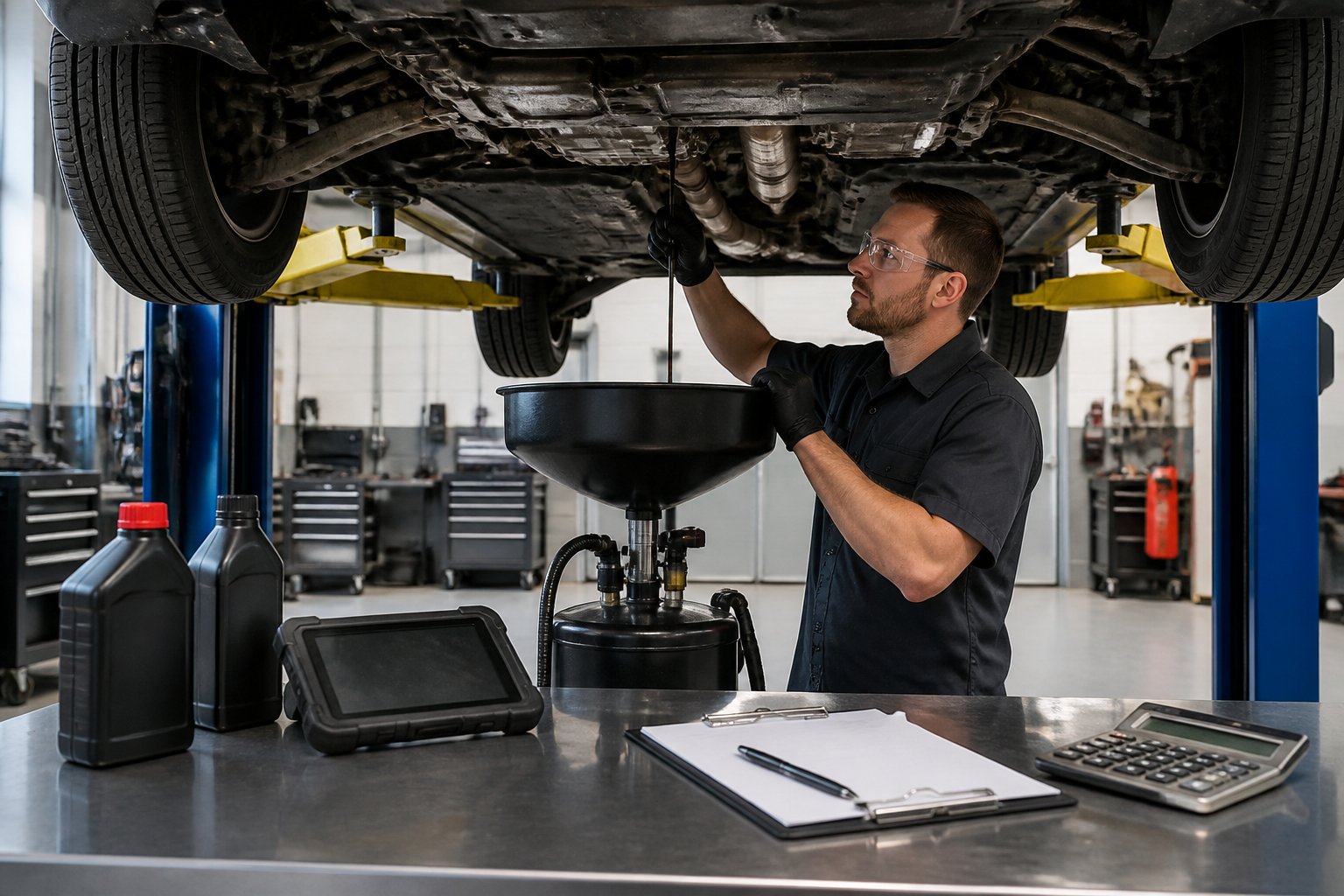
A transmission fluid change costs $80 to $400 at most repair shops, with the majority of drivers paying between $150 and $250 for a standard service. The exact number on your invoice depends on three things: whether the shop performs a drain-and-fill or a full fluid exchange, what type of transmission fluid your vehicle requires, and where you take the car. A CVT or a European luxury model can push that bill past $500.
Getting this service right protects one of the most expensive components in your vehicle: a worn transmission repair can run $2,500 to $6,000, while routine fluid maintenance rarely breaks $400. Transmission fluid lubricates gears, cools internal components, and keeps an automatic transmission shifting cleanly. Skip it long enough, and you’re not looking at a fluid bill anymore. You’re looking at a repair bill.
Shops price this job differently depending on the method they use and the equipment they own. Knowing what you’re being charged for, and why, puts you in a stronger position to approve or question a quote before work begins.
How Much Will You Pay for Transmission Service?
Most drivers pay between $80 and $400 for transmission service, and the spread comes down to which procedure the shop performs. A basic drain-and-fill sits at the low end of that range, while a machine-assisted fluid exchange or flush lands higher. Vehicle type, fluid grade, and shop overhead all shift the final number.
Typical Price Ranges for a Drain-and-Fill
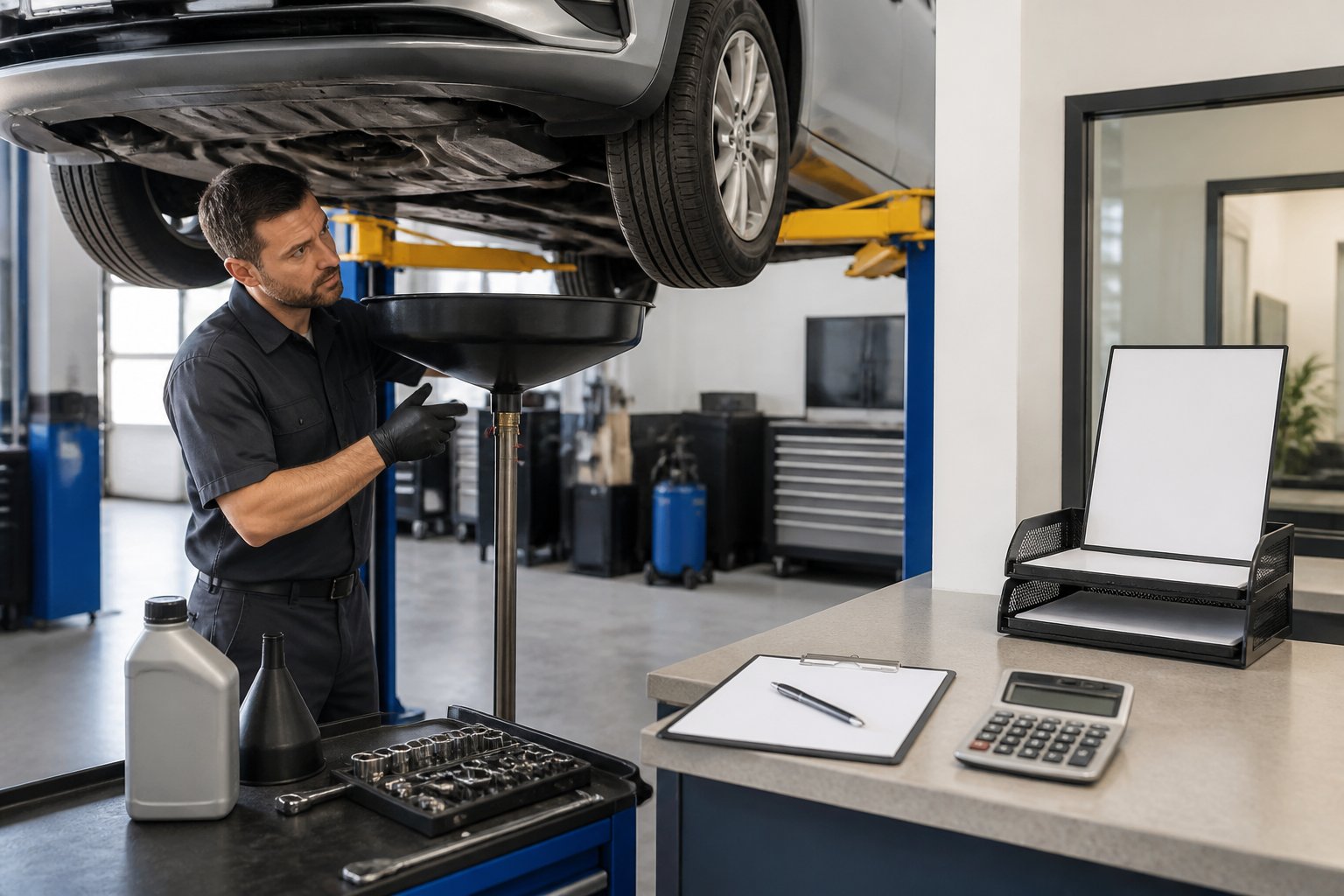
A drain-and-fill typically runs $80 to $250, with many shops landing between $100 and $175. This service drains fluid from the pan, replaces 4 to 6 quarts, and often includes a new filter and gasket. It’s the most common service quoted for routine maintenance visits between 30,000 and 60,000 miles.
Typical Price Ranges for a Fluid Exchange or Flush
A fluid exchange or flush costs $150 to $400, sometimes reaching $450 on vehicles with large fluid capacities. The higher price reflects the machine used to cycle fluid through the torque converter and cooler lines, plus the 12 to 22 quarts of fluid the process consumes. Some independent shops and dealerships quote flushes as high as $290 to $343 for vehicles requiring specialty fluid.
Why a Written Estimate Matters
A written estimate protects you from surprise charges once the vehicle is on the lift. Ask the service center to itemize fluid type, quantity, filter cost, and labor before you sign off. If a shop won’t put the estimate in writing, treat that as a signal to get a second quote.
Drain-and-Fill vs. Fluid Exchange: What Are You Buying?
A drain-and-fill replaces roughly a third to half of your transmission fluid, while a fluid exchange or flush replaces nearly all of it. Both services aim to restore fresh ATF and additive protection, but they differ in equipment, thoroughness, and cost. Choosing between them depends on your transmission’s condition and mileage, not just the price tag.
What Happens During a Drain-and-Fill
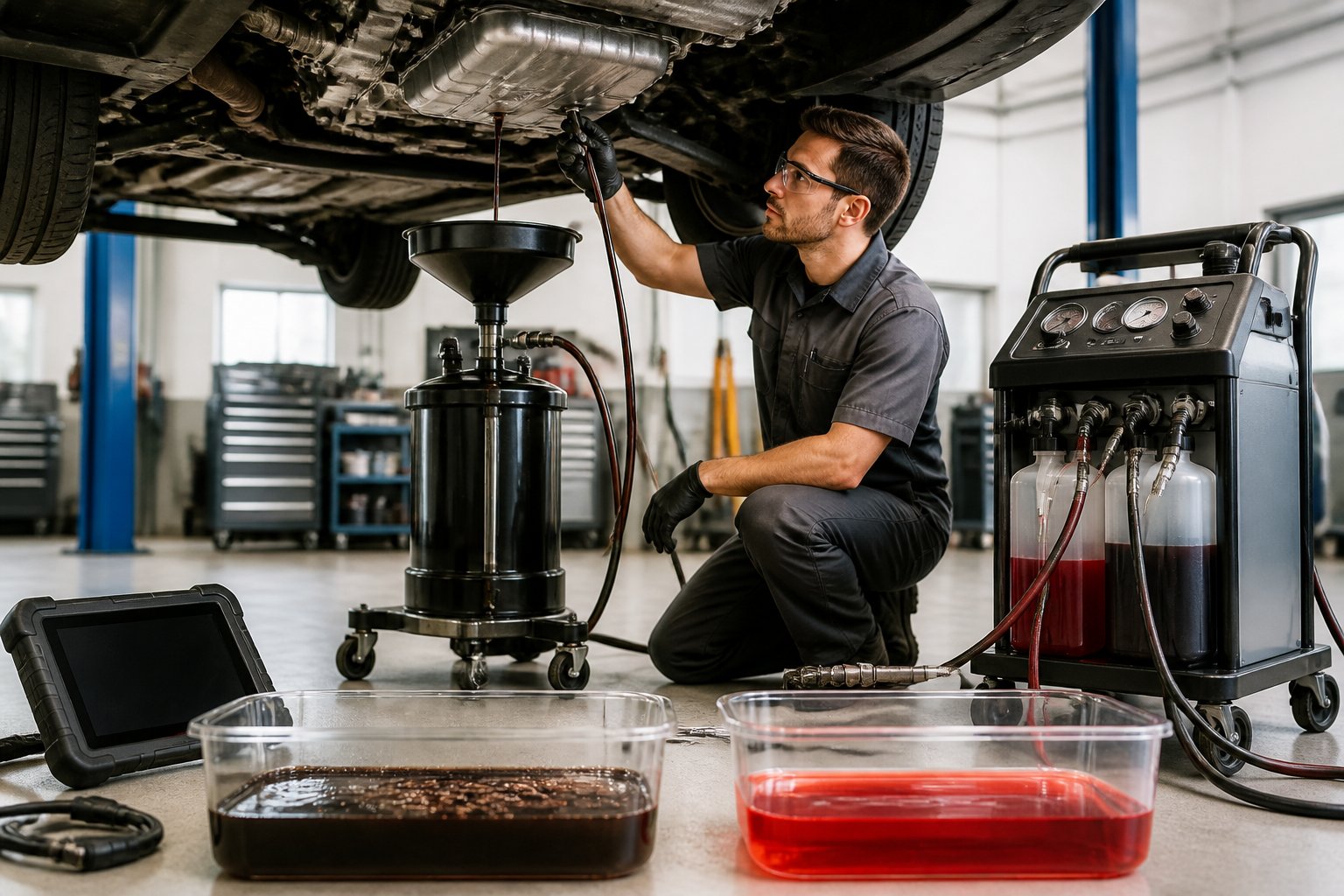
A technician removes the transmission pan, drains the old fluid, and refills with fresh ATF. This method leaves some old fluid trapped in the torque converter and internal passages. It’s gentler on aging transmissions because it doesn’t force fluid through the system under machine pressure.
What a Transmission Fluid Exchange Replaces
A transmission fluid exchange replaces nearly all the fluid in the system, including what sits in the torque converter and cooler lines. A machine connects to the transmission’s cooling circuit, pushes new fluid in while pulling old fluid out, and cycles until the fluid runs clean. This gets closer to a full refresh than a standard drain-and-fill can achieve.
How a Transmission Flush Uses the Torque Converter and Cooler Lines
A transmission flush routes fluid through the torque converter and cooler lines using dedicated flush equipment, which is why shops charge more for it. The torque converter holds a significant volume of fluid that a drain-and-fill never touches. On a transmission with existing wear or sludge buildup, forcing fluid through those passages at pressure can dislodge debris that then clogs narrow channels, which is why some technicians avoid flushing high-mileage units with unknown maintenance history.
When Pan Removal and Filter Replacement Add Value
Pan removal lets a technician inspect the fluid for metal shavings and replace the transmission filter, which a flush-only service skips. A combined fluid and filter change costs $604 to $766 on many vehicles, according to RepairPal estimates, because it adds parts and labor beyond a straight fluid swap. If your transmission pan has a drop-down filter, this inspection step catches problems a flush alone would miss.
What Makes One Vehicle Cost More Than Another?
Vehicle type drives most of the price difference between a $100 fluid change and a $500 one. Fluid specification, transmission design, and labor rates in your area combine to set the final number, and no two vehicles land on the same estimate for identical reasons.
Fluid Type, Capacity, and Manufacturer Specifications
Manufacturer-specified fluid costs more than generic ATF, sometimes by $10 to $25 per quart. A vehicle requiring 10 to 12 quarts of a specific synthetic transmission fluid formulation costs more to service than one taking 5 quarts of standard ATF. Using the wrong fluid spec risks shift quality and voids warranty coverage, so shops price in the correct fluid rather than substitute a cheaper option.
The Added Complexity of Sealed Transmissions
A sealed transmission adds labor time and cost because it lacks a conventional dipstick or easy-access drain plug. Technicians on these units often need a fill-plug procedure with a precise fluid level check at a specific temperature. Expect a sealed transmission service to run toward the higher end of the price range, even for a basic fluid replacement.
CVT and Automatic Transmission Requirements
A CVT requires its own fluid formulation that isn’t interchangeable with standard automatic transmission fluid, and pricing reflects that. CVT fluid changes commonly run $200 to $600 depending on the vehicle, well above what a conventional automatic transmission costs to service. Using standard ATF in a CVT can cause belt slippage and premature wear, so the fluid cost difference is not optional.
Labor Rates, Location, and Additional Parts
Labor rates vary by region and shop type, and that difference shows up directly on your invoice. A dealership in a major metro area charges more per hour than an independent shop in a smaller town, even for the identical procedure. Additional parts, such as a new pan gasket or crush washer, add $10 to $30 to most quotes.
Where Should You Get the Work Done?
Quick-lube chains offer the lowest prices, dealerships offer the most vehicle-specific expertise, and independent shops sit in between on both cost and specialization. Your choice should match the complexity of your transmission and how much documentation you need for warranty purposes.
Quick-Lube Chains vs. Independent Shops and Dealerships
Quick-lube chains handle straightforward drain-and-fill services quickly and at lower prices, typically $80 to $200. Independent shops often match or beat dealership pricing while offering more diagnostic attention. Dealerships charge the most, generally $150 to $500, but they stock manufacturer-specific fluid and document service history that some warranties require.
Comparing Jiffy Lube, Valvoline, Midas, and Firestone
| Provider | Typical Price Range | Best For |
|---|---|---|
| Jiffy Lube | $80-$180 | Quick drain-and-fill on common vehicles |
| Valvoline | $100-$200 | Routine service with synthetic fluid options |
| Midas | $100-$250 | Drain-and-fill plus broader repair diagnostics |
| Firestone | $150-$250 | Full-service maintenance alongside tire work |
Questions to Ask Before Approving a Quote
Ask the service center whether the quote covers a drain-and-fill or a full exchange, and confirm the fluid meets your manufacturer’s specification. Request the fluid quantity in writing, and ask whether filter replacement is included. If a quote seems unusually low, ask what’s excluded, since some advertised prices don’t include filters or gaskets.
When a Transmission Specialist Is the Better Choice
A transmission specialist is worth the extra cost when your vehicle already shows symptoms like slipping or delayed engagement. General service centers handle routine fluid changes well, but a specialist has the diagnostic tools to catch early transmission repair needs that a standard fluid change won’t reveal. High-mileage vehicles with no documented transmission service history also benefit from a specialist’s evaluation before any fluid work begins.
Choosing Service Before Small Problems Become Major Repairs
Sticking to your manufacturer’s maintenance interval is the cheapest way to avoid a major transmission repair bill. Most manufacturers recommend fluid replacement between 30,000 and 60,000 miles, though some sealed transmissions stretch that interval further. Skipping scheduled transmission maintenance is one of the more common ways drivers turn a $150 fluid change into a $3,000 repair.
Following the Manufacturer’s Maintenance Interval
Your owner’s manual lists the exact interval for your vehicle, and it’s worth following even if a shop suggests otherwise. Some manufacturers list “lifetime” fluid, but that designation often assumes normal driving conditions, not towing or stop-and-go traffic. Check your manual’s severe-service schedule if you tow, drive in extreme heat, or spend significant time in city traffic.
Warning Signs Such as Delayed Engagement or Burnt Fluid
Delayed engagement, where the vehicle hesitates before shifting into drive or reverse, signals fluid breakdown or internal wear. Burnt-smelling fluid, or fluid that’s turned dark brown or black instead of its original red, means the fluid has lost its lubricating properties. Either sign warrants an inspection before more driving compounds the damage.
Why Neglected High-Mileage Transmissions Need Careful Evaluation
A high-mileage transmission with no fluid service history needs evaluation before a shop recommends a flush. Forcing fresh fluid through a transmission that’s accumulated years of sludge can dislodge debris and cause new problems. A technician should check fluid condition and pan sediment first, then recommend a drain-and-fill or a more cautious approach rather than defaulting to the highest-priced service.
Paying for the Right Service, Not Just the Lowest Price
The lowest advertised transmission fluid change cost isn’t always the best value once you factor in fluid quality, filter replacement, and technician expertise. A $79 special that skips your manufacturer’s specified fluid can cost more in the long run than a $200 service done correctly. Matching the service to your vehicle’s actual condition, whether that’s a routine drain-and-fill or a more thorough fluid exchange, protects both your budget and your transmission.
Getting a written estimate, asking what fluid the shop plans to use, and choosing a provider suited to your transmission’s complexity are the habits that keep transmission service affordable over the life of your vehicle.
Frequently Asked Questions
How much does a transmission fluid change usually cost?
Most drivers pay between $80 and $400, with the majority landing in the $150 to $250 range for a standard drain-and-fill or exchange. The exact price depends on your transmission type, fluid specification, and whether you use a quick-lube chain, independent shop, or dealership. CVTs and luxury vehicles often cost more than this typical range.
Is a transmission flush more expensive than a drain-and-fill?
A transmission flush costs more than a drain-and-fill, typically running $150 to $400 compared to $80 to $250. The higher price reflects the flush machine, additional fluid volume (12 to 22 quarts versus 5 to 7), and longer service time. A flush replaces nearly all the fluid, while a drain-and-fill replaces roughly a third to half.
Does Jiffy Lube change transmission fluid?
Jiffy Lube offers transmission fluid services at many locations, typically priced between $80 and $180 for a standard drain-and-fill. Availability and pricing vary by location, so confirm services and current pricing with your local store before scheduling. They generally handle routine fluid changes rather than complex transmission diagnostics.
How much does a CVT fluid change cost?
A CVT fluid change costs $200 to $600, higher than a conventional automatic transmission service because CVTs require specialized fluid formulations. This fluid isn’t interchangeable with standard ATF, and using the wrong type can cause belt slippage or premature wear. Dealerships and specialists are the most reliable sources for correct CVT fluid.
How often should transmission fluid be replaced?
Transmission fluid should be replaced every 30,000 to 60,000 miles for most vehicles, though your owner’s manual has the exact figure for your model. Vehicles used for towing, frequent stop-and-go driving, or extreme temperatures often need service on the shorter end of that range. Some sealed transmissions extend the interval further, but severe driving conditions can shorten it regardless of what the manual states.Sonraki