
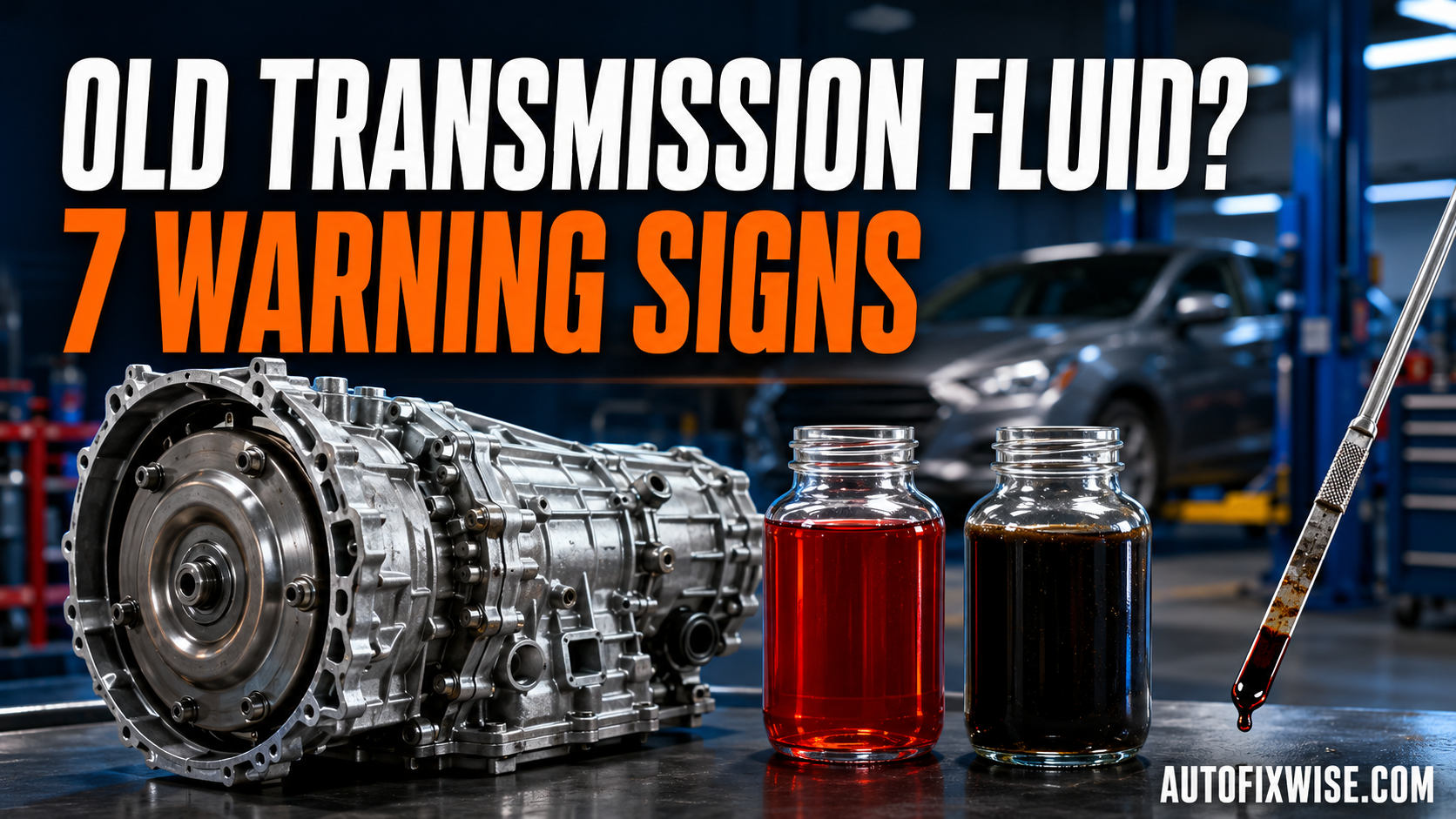
Transmission fluid is easy to overlook because it usually lasts much longer than engine oil. However, it performs several demanding jobs every time you drive.
Depending on the transmission design, the fluid lubricates moving parts, transfers hydraulic pressure, controls heat, and helps clutches engage smoothly. As the fluid ages, heat and contamination can reduce its ability to perform these functions.
So, what happens if you don’t change transmission fluid?
The transmission may begin shifting roughly, slipping, overheating, or making unusual noises. Continued operation with degraded or insufficient fluid can eventually cause expensive internal damage. However, the correct service interval and procedure depend on the vehicle and transmission type.
This guide covers seven warning signs of old transmission fluid, the damage neglected fluid may cause, service costs, and what to consider when maintaining a high-mileage vehicle.
What Does Transmission Fluid Do?
Transmission fluid is more than a basic lubricant. In many automatic transmissions, it also functions as a hydraulic fluid that allows internal components to apply pressure and change gears.
Transmission fluid may be responsible for:
- Lubricating gears, bearings, and shafts
- Cooling internal transmission components
- Operating hydraulic circuits
- Helping clutch packs engage correctly
- Cleaning and carrying away small contaminants
- Protecting metal components against corrosion
- Supporting consistent and smooth gear changes
The fluid must operate under significant pressure and heat. Over time, its additives can break down, and debris from normal internal wear may accumulate.
Once the fluid can no longer protect the transmission properly, shifting quality and component life may be affected.
Do All Cars Use the Same Transmission Fluid?
No. Transmission-fluid requirements vary significantly between vehicles.
Common transmission types include:
- Conventional automatic transmissions
- Continuously variable transmissions
- Dual-clutch transmissions
- Automated manual transmissions
- Traditional manual transmissions
Each design may require a different fluid specification and service procedure. Standard automatic transmission fluid should never be added to a CVT or dual-clutch transmission unless the manufacturer specifically approves it.
Using the wrong fluid can cause poor operation and serious internal damage. Always verify the required specification through the owner’s manual or manufacturer service information.
What Happens If You Don’t Change Transmission Fluid?
Transmission fluid gradually becomes less effective as it is exposed to heat, friction, and contamination.
If it remains in service too long, several problems may develop.
1. The Transmission May Overheat
Heat is one of the transmission’s greatest enemies. Fresh fluid helps absorb and transfer heat away from internal components.
Old or low fluid may not control temperature effectively. Excessive heat can harden seals, damage clutch material, reduce lubrication, and accelerate fluid breakdown.
Transmission overheating may cause:
- A warning message or temperature light
- Delayed or rough shifting
- A burning odor
- Reduced vehicle performance
- Temporary loss of certain gears
- Limp mode
If an overheating warning appears, stop safely and allow the vehicle to cool. Continuing to drive can turn a manageable problem into a major repair.
2. Shifts May Become Rough or Delayed
Automatic transmissions rely on hydraulic pressure and friction characteristics to complete gear changes.
Degraded fluid may contribute to delayed engagement, harsh shifts, hesitation, or inconsistent operation. You may notice a pause after selecting Drive or Reverse, followed by a sudden engagement.
Rough shifting does not always mean the fluid is responsible. Solenoids, sensors, wiring, valve-body components, engine problems, and internal wear can create similar symptoms.
A proper diagnosis should come before replacing expensive parts.
3. The Transmission May Begin Slipping
Transmission slipping occurs when engine speed increases without a corresponding increase in vehicle speed.
You might press the accelerator and hear the engine rev, but the vehicle may not accelerate normally. The transmission may also appear to move out of gear temporarily.
Low, contaminated, or incorrect fluid can contribute to slipping. However, slipping can also indicate worn clutch packs, pressure loss, a damaged valve body, or other internal problems.
Severe slipping should be diagnosed immediately. Continued driving generates additional heat and can increase internal damage.
4. Internal Components May Wear Faster
Transmission fluid creates a protective film between moving metal components. As the fluid deteriorates, lubrication and wear protection may decline.
Bearings, gears, bushings, clutch packs, pumps, and valve-body components may experience additional stress.
Metal particles created through wear can circulate with the fluid. The filter and transmission magnets capture some contamination, but excessive debris may interfere with small hydraulic passages and solenoids.
5. The Fluid May Become Contaminated
Normal transmission operation can produce small amounts of clutch material and microscopic metal particles.
Over time, transmission fluid may become dark and contaminated. The level of concern depends on the transmission design and the amount and type of debris present.
A small amount of fine material on a transmission-pan magnet can be normal. Large metal fragments, heavy clutch material, or shiny particles may indicate internal damage.
Color alone is not enough to determine whether a transmission is healthy. Fluid condition, odor, level, scan data, symptoms, and service history should be considered together.
6. Fuel Economy May Decline
A transmission that slips or struggles to select the correct ratio can cause the engine to operate less efficiently.
The driver may need to use more throttle to maintain speed. Although many issues can reduce fuel economy, a malfunctioning transmission should be considered when poor mileage appears alongside shifting problems.
7. Complete Transmission Failure Can Occur
Severely degraded or low fluid can contribute to overheating, pressure loss, clutch damage, bearing failure, or other internal problems.
Eventually, the vehicle may lose one or more gears, fail to move, or require transmission replacement or rebuilding.
Transmission failure is rarely caused by one missed service alone. It usually results from a combination of heat, wear, low fluid, contamination, mechanical problems, and delayed repairs.
Regular inspection and timely service can reduce the risk, but it cannot reverse existing internal damage.
Seven Warning Signs Your Transmission Fluid Needs Attention
These symptoms do not prove that the fluid needs replacement, but they indicate that the transmission should be inspected.
1. Delayed Engagement
The vehicle may hesitate before moving after you select Drive or Reverse. A brief pause may be normal on certain vehicles, especially during cold weather, but a noticeable or worsening delay requires attention.
Possible causes include low fluid, pressure loss, valve-body problems, worn seals, or internal clutch wear.
2. Rough or Jerky Shifting
Gear changes may feel unusually firm, abrupt, or inconsistent. The vehicle might jerk when accelerating or slowing down.
Because modern transmissions are electronically controlled, diagnostic trouble codes and live data should be checked before assuming the fluid is the only problem.
3. Transmission Slipping
The engine speed may rise while vehicle speed remains unchanged. You may also feel the transmission disengage briefly during acceleration.
Avoid hard acceleration when the transmission is slipping. Additional heat can worsen existing damage.
4. Whining, Humming, or Grinding Noises
Low fluid, worn bearings, damaged gears, or pump problems may produce unusual noises.
Grinding is particularly serious and should not be ignored. The exact noise and its timing can help a technician locate the problem.
5. Burning Smell
A burning odor may indicate overheated transmission fluid, an external fluid leak reaching a hot surface, or another mechanical problem.
Healthy fluid normally has a distinct petroleum smell, but it should not smell sharply burned.
6. Transmission-Fluid Leak
Transmission fluid may leak from:
- Pan gasket
- Drain plug
- Cooler lines
- Axle or output seals
- Input-shaft seal
- Electrical connector seals
- Transmission cooler
- Housing damage
Fluid color varies by type and age, so a leak cannot always be identified by color alone. Any unexplained fluid loss should be inspected.
7. Warning Light or Limp Mode
Some vehicles display a specific transmission warning, while others illuminate the general check engine light.
When a serious fault is detected, the vehicle may enter limp mode. This limits transmission operation to protect internal components and may leave the transmission locked in one gear.
A diagnostic scan can identify stored codes, but the code should not be treated as automatic proof that a particular part has failed.
How Often Should Transmission Fluid Be Changed?
There is no universal transmission-fluid replacement interval.
Depending on the vehicle and transmission, the recommended interval may be based on:
- Mileage
- Time
- Driving conditions
- Fluid-monitoring data
- Inspection results
- Manufacturer-specific maintenance schedules
Some vehicles require relatively frequent service, while others list longer intervals or describe the fluid as long-life.
“Lifetime fluid” does not always mean that the fluid will remain perfect for the entire physical life of the transmission. It may refer to the manufacturer’s intended service period or a particular operating environment.
The safest approach is to follow the schedule for the exact year, model, engine, and transmission.
Severe Driving Conditions
A shorter service interval may be appropriate when the vehicle is regularly exposed to demanding conditions.
Examples include:
- Frequent towing
- Carrying heavy loads
- Stop-and-go traffic
- Extreme heat or cold
- Mountain driving
- Repeated short trips
- Commercial use
- Long periods of idling
- Dusty or off-road conditions
- Aggressive acceleration
Heat and repeated gear changes place additional stress on the fluid. If the vehicle is used under severe conditions, consult the appropriate maintenance schedule rather than the normal-service schedule.
Should You Change Transmission Fluid After 100,000 Miles?
A high odometer reading alone is not a reason to avoid transmission service. However, a vehicle with unknown maintenance history should be evaluated carefully.
Before servicing a high-mileage transmission, consider:
- Whether the transmission is already slipping
- Previous service records
- Fluid level and condition
- Stored diagnostic codes
- Evidence of leaks
- Amount of debris in the transmission pan
- Manufacturer service instructions
- Whether the correct fluid is available
Fresh fluid does not repair worn clutch packs, damaged bearings, or pressure loss. If a badly worn transmission develops problems after service, the underlying damage likely existed beforehand.
For more high-mileage maintenance information, see our 100,000 Mile Maintenance Checklist.
Transmission Fluid Change vs. Flush
The terms “fluid change” and “flush” are often used as if they mean the same thing, but the procedures may be different.
Drain and fill
During a drain-and-fill service, fluid is removed through the drain plug or by removing the transmission pan. The filter may also be replaced when the design allows it.
Only part of the total fluid may be removed because some remains inside the torque converter, cooler, and internal passages.
A drain and fill may include:
- Removing old fluid
- Inspecting the fluid and pan
- Cleaning the pan and magnets
- Replacing the serviceable filter
- Installing a new gasket
- Refilling with the correct fluid
- Checking the level at the specified temperature
Transmission flush
A fluid-exchange machine replaces a larger percentage of the old fluid. Procedures and equipment vary.
A flush should not be used as a universal solution for every vehicle. Some manufacturers specify particular service methods, and certain high-mileage or already-failing transmissions require careful evaluation.
The correct procedure is the one approved for the vehicle’s exact transmission.
Can Changing Old Transmission Fluid Damage the Transmission?
This is one of the most common transmission-maintenance questions.
Changing fluid with the correct product and approved procedure does not normally damage a healthy transmission. However, servicing a severely worn transmission will not reverse existing mechanical problems.
An old transmission may already have:
- Worn clutch material
- Internal pressure loss
- Hardened seals
- Damaged solenoids
- Bearing wear
- Excessive metal contamination
- A clogged filter
After service, an existing problem may become more noticeable or simply continue progressing. This can create the impression that the new fluid caused the failure.
If the transmission already slips, grinds, or contains significant metal debris, obtain a professional diagnosis before authorizing any fluid service.
Can You Check Transmission Fluid Yourself?
It depends on the vehicle.
Some transmissions have a traditional dipstick. Others use a sealed design with a check plug and a temperature-specific level-setting procedure.
If the vehicle has a dipstick, the checking process may require:
- Parking on level ground
- Warming the transmission
- Keeping the engine running
- Moving the shifter through each position
- Checking the level in a specified gear
Procedures vary, so do not assume that every transmission is checked the same way.
A sealed transmission may require the vehicle to be level on a lift while the fluid temperature is monitored with a scan tool. Adding too much fluid can be harmful, just like operating with too little.
What Does Bad Transmission Fluid Look Like?
Transmission-fluid appearance varies by specification. New fluid may be red, amber, blue, green, or another color.
Possible warning signs include:
- Strong burned odor
- Heavy discoloration
- Visible metal particles
- Milky or cloudy appearance
- Foamy fluid
- Very low fluid level
- Excessive clutch debris
Milky fluid may indicate contamination from water or coolant, depending on the vehicle’s design. Foaming may result from an incorrect level, aeration, or the wrong fluid.
A technician should evaluate suspicious fluid rather than relying only on a color chart.
Transmission Fluid Change Cost
Transmission service costs vary according to fluid capacity, transmission type, labor rate, and whether the pan and filter must be removed.
| Service | Estimated cost |
|---|---|
| Basic transmission inspection | $50–$150 |
| Automatic transmission drain and fill | $150–$350 |
| Transmission fluid and filter service | $250–$500 |
| CVT fluid service | $180–$400 |
| Dual-clutch transmission service | $250–$600 |
| Transmission leak repair | $150–$1,500+ |
| Solenoid or valve-body repair | $400–$2,000+ |
| Transmission rebuild or replacement | $3,000–$8,000+ |
These are general U.S. estimates rather than guaranteed prices. Luxury vehicles, performance cars, trucks, and specialized transmissions may cost more.
Always request an itemized estimate showing the fluid specification, quantity, filter, gasket, and labor charge.
Can You Add Transmission Fluid Instead of Changing It?
Adding fluid may correct a low level temporarily, but it does not solve the cause of fluid loss.
Unlike engine oil, transmission fluid is not normally consumed in significant amounts. A low level often indicates a leak or an incorrect previous fill.
Adding too much fluid can cause aeration, shifting problems, leaks, and overheating. Use only the correct fluid and follow the approved level-setting procedure.
If the fluid level continues to drop, locate and repair the leak.
Can You Mix Different Transmission Fluids?
Transmission fluids should not be mixed unless their specifications explicitly allow it.
Fluids can have different:
- Viscosity characteristics
- Friction modifiers
- Additive packages
- Temperature properties
- Compatibility requirements
A fluid described as “universal” may not be approved for every transmission. Confirm that the exact required specification appears on the product information.
When in doubt, use the manufacturer-specified fluid.
How to Help Your Transmission Last Longer
Good driving and maintenance habits may extend transmission life.
- Check for fluid leaks regularly.
- Use the exact specified transmission fluid.
- Follow the appropriate service schedule.
- Avoid exceeding the vehicle’s towing capacity.
- Allow the transmission to engage before accelerating.
- Do not shift between Drive and Reverse while moving.
- Address overheating immediately.
- Keep the engine cooling system in good condition.
- Investigate rough shifting, slipping, and warning lights early.
- Do not approve additives as a substitute for diagnosis.
The transmission and engine cooling systems may be connected through a transmission cooler. Engine overheating can therefore affect transmission temperature on some vehicles.
Frequently Asked Questions
What happens if transmission fluid is never changed?
The fluid may gradually lose its protective and hydraulic properties. This can contribute to overheating, rough shifting, contamination, accelerated wear, and eventual transmission failure.
Can old transmission fluid cause slipping?
Yes, degraded or low fluid can contribute to slipping. Internal clutch wear, pressure loss, solenoid faults, and valve-body problems can also cause the same symptom.
Will a transmission warning light turn on when the fluid is old?
Not necessarily. Many vehicles do not directly measure fluid condition. A warning light may appear only after the computer detects excessive temperature, pressure problems, incorrect gear ratios, or another malfunction.
Is dark transmission fluid always bad?
No. Some fluids naturally darken during service. Condition should be assessed using odor, contamination, fluid level, symptoms, service history, and manufacturer guidance.
Should I change transmission fluid if the car shifts normally?
Follow the vehicle’s scheduled maintenance requirements even if no symptoms are present. Preventive service is intended to protect the transmission before problems begin.
Is a transmission flush better than a fluid change?
Not automatically. The appropriate procedure depends on the transmission design, manufacturer instructions, fluid condition, and vehicle history.
Can new transmission fluid fix rough shifting?
It may improve operation when the problem is caused by degraded or incorrect fluid. It cannot repair worn clutch packs, damaged gears, faulty solenoids, or other mechanical failures.
How long can a transmission last without a fluid change?
There is no dependable universal mileage. Transmission design, fluid specification, temperature, driving conditions, maintenance history, and internal wear all affect service life.
Final Thoughts
Failing to change transmission fluid can contribute to overheating, delayed engagement, rough shifting, slipping, and accelerated internal wear. In severe cases, neglected fluid or an undetected leak can contribute to complete transmission failure.
However, transmission service should never be approached with a universal interval or one-size-fits-all fluid. Check the maintenance schedule for the exact vehicle and use the specified fluid and procedure.
If the transmission already slips, grinds, overheats, or enters limp mode, have it diagnosed before requesting a flush. Timely inspection is usually far less expensive than replacing an entire transmission.
Note: Transmission designs and service procedures vary by vehicle. Consult your owner’s manual or a qualified technician before selecting a fluid or performing transmission maintenance.